|
Getting your Trinity Audio player ready... |
中文下载
THE doctrine of the Divine Unity is a truth of natural religion; the doctrine of the Trinity is a truth of revealed religion.
神的独一性教义是自然宗教的真理;三位一体的教义是启示宗教的真理。
The various systems of natural theism present arguments for the Divine existence, unity, and attributes, but proceed no further.
自然有神论的各种体系提出了关于神的存在、独一性和属性的论证,但不再进一步。
They do not assert and endeavor to demonstrate that the Supreme Being is three persons in one essence.
它们并不断言并试图证明至高者是在一个本质中的三个位格。
It is because this doctrine is not discoverable by human reason, that the Christian church has been somewhat shy of attempts to construct it analytically; or even to defend it upon grounds of reason.
正因为这一教义不能被人类理性发现,基督教会对于试图分析地构建它,甚至在理性的基础上为它辩护,一直有些避讳。
The keen Dr. South expresses the common sentiment, when he remarks that “as he that denies this fundamental article of the Christian religion may lose his soul, so he that much strives to understand it may lose his wits.”
敏锐的萨乌斯博士(Dr. South)表达了普遍的情感,他说:“正如否认基督教这一基本信条的人可能会失去灵魂,极力试图理解它的人可能会失去理智。”
Yet all the truths of revelation, like those of natural religion, have in them the element of reason, and are capable of a rational defense.
然而,启示的所有真理,像自然宗教的真理一样,其中都有理性的要素,并且能够进行理性的辩护。
At the very least their self-consistence can be shown, and objections to them can be answered.
至少可以展示它们的自洽性,并且回答对它们的反对意见。
And this is a rational process.
这是一个理性的过程。
For one of the surest characteristics of reason is, freedom from self contradiction, and consonance with acknowledged truths in other provinces of human inquiry and belief.
因为理性最确定的特征之一,就是免于自相矛盾,并与人类探究和信仰的其他领域中公认的真理相一致。
It is a remarkable fact, that the earlier forms of Trinitarianism are among the most metaphysical and speculative of any in dogmatic history.
一个显著的事实是,早期形式的三位一体论是教义史上最形而上学和思辨的。
The controversy with the Arian and the Semi-Arian, brought out a statement and defense of the truth, not only upon scriptural but ontological grounds.
与亚流派(Arian)和半亚流派(Semi-Arian)的争论,引出了不仅基于圣经而且基于本体论理由的对真理的陈述和辩护。
Such a powerful dialectician as Athanasius, while thoroughly and intensely scriptural—while starting from the text of scripture, and subjecting it to a rigorous exegesis—did not hesitate to pursue the Arian and Semi-Arian dialectics to its most recondite fallacy in its subtlest recesses.
像亚大纳西(Athanasius)这样强有力的辩证学家,虽然彻底且强烈地依循圣经——虽然从圣经经文出发,并对其进行严谨的释经——却毫不犹豫地追踪亚流派和半亚流派的辩证法,直捣其最深奥隐秘之处的最深奥谬误。
If any one doubts this, let him read the four Orations of Athanasius, and his defence of the Nicene Decrees.
如果有人怀疑这一点,让他去读亚大纳西的四篇《驳亚流派演说》(Orations),以及他为《尼西亚信经》(Nicene Decrees)的辩护。
In some sections of Christendom, it has been contended that the doctrine of the Trinity should be received without any attempt at all to establish its rationality and intrinsic necessity.
在基督教界的某些部分,有人主张应当接受三位一体的教义,而不做任何尝试去确立其合理性和内在必要性。
In this case, the tenets of eternal generation and procession have been regarded as going beyond the Scripture data, and if not positively rejected, have been thought to hinder rather than assist faith in three divine persons and one God.
在这种情况下,永恒受生(generation)和发出(procession)的信条被视为超出了圣经的资料,如果不是被断然拒绝,也被认为与其说是帮助,不如说是阻碍了对三个神圣位格和一位神的信仰。
But the history of opinions shows that such sections of the church have not proved to be the strongest defenders of the Scripture statement, nor the most successful in keeping clear of the Sabellian, Arian, or even Socinian departure from it.
但是观点史表明,教会的这些部分并未证明自己是圣经陈述的最有力捍卫者,也不是在避开撒伯流派(Sabellian)、亚流派(Arian)甚至索齐尼派(Socinian)的偏离方面最成功的。
Those churches which have followed Scripture most implicitly, and have most feared human speculation, are the very churches which have inserted into their creeds the most highly analytic statement that has yet been made of the doctrine of the Trinity.
那些最绝对地遵循圣经、最惧怕人类思辨的教会,恰恰是那些将迄今为止对三位一体教义所作出的最高度分析性陈述纳入其信条的教会。
The Nicene Trinitarianism is incorporated into nearly all the symbols of modern Christendom; and this specifies, particularly, the tenets of eternal generation and procession with their corollaries.
尼西亚三位一体论被纳入现代基督教几乎所有的信纲中;这特别指明了永恒受生和发出的信条及其推论。
The English Church, to whose great divines, Hooker, Bull, Waterland, and Pearson, scientific Trinitarianism owes a very lucid and careful statement, has added the Athanasian creed to the Nicene.
英国教会(English Church)在尼西亚信经之外增加了亚大纳西信经(Athanasian creed),学术性三位一体论应当归功于该教会伟大的神学家胡克(Hooker)、布尔(Bull)、沃特兰(Waterland)和皮尔逊(Pearson)所作出的非常清晰和严谨的陈述。
The Presbyterian churches, distinguished for the closeness of their adherence to the simple Scripture, yet call upon their membership to confess, that “in the unity of the Godhead there be three persons, of one substance, power, and eternity; God the Father, God the Son, and God the Holy Ghost.
长老会各教会,虽以紧密坚持单纯的圣经而著称,却要求其成员承认:“在神性的合一里有三个位格,同本质、同权能、同永恒;即圣父神、圣子神和圣灵神。
The Father is of none, neither begotten nor proceeding; the Son is eternally begotten of the Father; the Holy Ghost eternally proceeding from the Father and the Son.”
圣父不属于任何源头,既非受生也非发出;圣子永恒受生于圣父;圣灵永恒由圣父和圣子发出。”
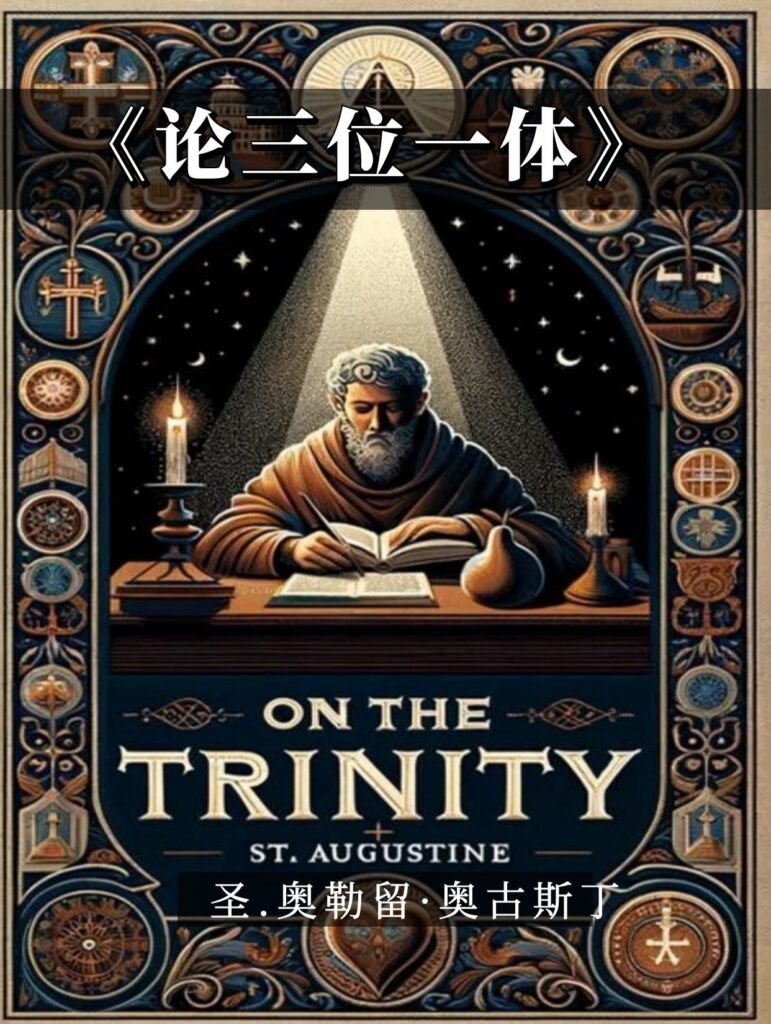
The treatise of Augustin upon the Trinity, which is here made accessible to the English reader, is one of the ablest produced in the patristic age.
奥古斯丁(Augustin)关于三位一体的论著,在此供英语读者阅读,是教父时代产生的最有能力的著作之一。
The author devoted nearly thirty years of his matured life to its composition (A. D. 400 to 428).
作者将其成熟生命中近三十年的时间投入到该书的写作中(公元400年至428年)。
He was continually touching and retouching it, and would have delayed its publication longer than he did, had a copy not been obtained surreptitiously and published.
他不断地修改润色,如果不是有人暗中获取了一份副本并将其出版,他原本会比实际上更推迟它的出版。
He seems to have derived little assistance from others; for although the great Greek Trinitarians—Athanasius, the two Gregories, and Basil—had published their treatises, yet he informs us that his knowledge of Greek, though sufficient for understanding the exegetical and practical writings of his brethren of the Greek Church, was not adequate to the best use of their dialectical and metaphysical compositions.
他似乎很少从他人那里获得帮助;因为虽然伟大的希腊三位一体论者——亚大纳西、两位格列高利(Gregories)和巴西流(Basil)——已经出版了他们的论著,但他告诉我们,他的希腊语知识虽然足以理解希腊教会弟兄们的释经和实践著作,却不足以最好地利用他们的辩证和形而上学著作。
Accordingly, there is no trace in this work of the writings of the Greek Trinitarians, though a substantial agreement with them.
因此,在这部作品中没有希腊三位一体论者著作的痕迹,尽管与他们有实质性的一致。
The only Trinitarian author to whom he alludes is Hilary—a highly acute and abstruse Trinitarian.
他唯一提到的三位一体论作者是希拉里(Hilary)——一位高度敏锐且深奥的三位一体论者。
In his general position, Augustin agrees with the Nicene creed; but laying more emphasis upon the consubstantiality of the persons, and definitely asserting the procession of the Spirit from the Father and Son.
在总体立场上,奥古斯丁与尼西亚信经一致;但更强调位格的同质性,并明确断言圣灵从圣父和圣子发出。
Some dogmatic historians seem to imply that he differed materially from the Nicene doctrine on the point of subordination.
一些教义史学家似乎暗示,他在次序论(subordination)这一点上与尼西亚教义有重大分歧。
Hagenbach (Smith’s Ed. § 95) asserts that “Augustin completely purified the dogma of the Trinity from the older vestiges of subordination;” and adds that “such vestiges are unquestionably to be found in the most orthodox Fathers, not only in the East but also in the West.”
哈根巴赫(Hagenbach)(史密斯版第95节)断言“奥古斯丁彻底清除了三位一体教义中旧有的次序论痕迹”;并补充说“这样的痕迹无疑可以在最正统的教父中找到,不仅在东方,也在西方。”
He cites Hilary and Athanasius as examples, and quotes the remark of Gieseler, that “the idea of a subordination lies at the basis of such declarations.”
他引用希拉里和亚大纳西作为例子,并引用吉塞勒(Gieseler)的评论,即“次序观念位于此类声明的基础之上。”
Neander (II. 470, Note 2) says that Augustin “kept at a distance everything that bordered on subordinationism.”
尼安德(Neander)(II. 470,注2)说奥古斯丁“对一切近乎次序论的东西都敬而远之。”
These statements are certainly too sweeping and unqualified.
这些说法显然过于笼统且无保留。
There are three kinds of subordination: the filial or trinitarian; the theanthropic; and the Arian.
有三种次序:子嗣的或三位一体内的;神人二性的;以及亚流派的。
The first is taught, and the second implied, in the Nicene creed.
第一种是尼西亚信经所教导的,第二种是其中所隐含的。
The last is denied and excluded.
最后一种则是被否认和排除的。
Accordingly, dogmatic historians like Petavius, Bull, Waterland, and Pearson, contend that the Nicene creed, in affirming the filial, but denying the Arian subordination; in teaching subordination as to person and relationship, but denying it as to essence; enunciates a revealed truth, and that this is endorsed by all the Trinitarian fathers, Eastern and Western.
因此,像佩塔维乌斯(Petavius)、布尔、沃特兰和皮尔逊这样的教义史学家主张,尼西亚信经在确认子嗣次序但否认亚流派次序时;在教导关于位格和关系的次序但否认关于本质的次序时;阐明了一个启示的真理,且这是所有东方和西方三位一体论教父所认可的。
And there certainly can be no doubt that Augustin held this view.
毫无疑问,奥古斯丁持这种观点。
He maintains, over and over again, that Sonship as a relationship is second and subordinate to Fatherhood; that while a Divine Father and a Divine Son must necessarily be of the very same nature and grade of being, like a human father and a human son, yet the latter issues from the former, not the former from the latter.
他反复坚持,作为一种关系的子格(Sonship)是第二位的,且从属于父格(Fatherhood);虽然神圣的父亲和神圣的儿子必须必然具有完全相同的本性和存在等级,就像人类的父亲和人类的儿子一样,但后者出自前者,而非前者出自后者。
Augustin’s phraseology on this point is as positive as that of Athanasius, and in some respects even more bold and capable of misinterpretation.
奥古斯丁在这一点的措辞与亚大纳西一样肯定,在某些方面甚至更大胆且更容易被误解。
He denominates the Father the “beginning” (principium) of the Son, and the Father and Son the “beginning” (principium) of the Holy Spirit.
他称圣父为圣子的“开端”(principium),称圣父和圣子为圣灵的“开端”(principium)。
“The Father is the beginning of the whole divinity, or if it is better so expressed, deity.” IV. xx. 29.
“圣父是整个神性,或者如果表达得更好的话,是神格的开端。” IV. xx. 29。
“In their mutual relation to one another in the Trinity itself, if the begetter is a beginning (principium) in relation to that which he begets, the Father is a beginning in relation to the Son, because he begets Him.” V. xiv. 15.
“在三位一体内部彼此的相互关系中,如果生者相对于祂所生的而言是开端(principium),那么圣父相对于圣子就是开端,因为祂生了祂。” V. xiv. 15。
Since the Holy Spirit proceeds from both Father and Son, “the Father and Son are a beginning (principium) of the Holy Spirit, not two beginnings.” V. xiv. 15. Compare also V. xiii.; X. iv.; and annotations pp.
既然圣灵从圣父和圣子两者发出,“圣父和圣子是圣灵的一个开端(principium),而不是两个开端。” V. xiv. 15。另参阅 V. xiii.; X. iv.; 以及注释页。
Augustin employs this term “beginning” only in relation to the person, not to the essence.
奥古斯丁仅在关于位格的关系上使用“开端”这个词,而不是关于本质。
There is no “beginning,” or source, when the essence itself is spoken of.
当谈到本质本身时,没有“开端”或源头。
Consequently, the “subordination” (implied in a “beginning” by generation and spiration) is not the Arian subordination, as to essence, but the trinitarian subordination, as to person and relation.
因此,(在通过受生和发出而成为“开端”中所隐含的)“次序”不是亚流派关于本质的次序,而是三位一体论关于位格和关系的次序。
Augustin starts with the assumption that man was made in the image of the triune God, the God of revelation not in the image of the God of natural religion, or the untriune deity of the nations.
奥古斯丁从这样一个假设出发:人是按照三一神的形象造的,即启示的神,而不是按照自然宗教的神或列国非三一神祇的形象造的。
Consequently, it is to be expected that a trinitarian analogue can be found in his mental constitution.
因此,可以预期在他的精神构造中能找到三位一体的类比。
If man is God’s image, he will show traces of it in every respect.
如果人是神的形象,他将在各个方面显示出它的痕迹。
All acknowledge that the Divine unity, and all the communicable attributes, have their finite correspondants in the unity and attributes of the human mind.
所有人都承认,神的独一性以及所有可传通的属性,在人类心灵的统一性和属性中都有其有限的对应物。
But the Latin father goes further than this.
但这位拉丁教父走得比这更远。
This, in his view, is not the whole of the Divine image.
在他看来,这并不是神形象的全部。
When God says, “Let us make man in our image, after our likeness” (Gen. 1:26), Augustin understands these words to be spoken by the Trinity, and of the Trinity—by and of the true God, the God of revelation: the Father, Son, and Holy Spirit, one God.
当神说:“我们要照着我们的形象、按着我们的样式造人”(创世记 1:26)时,奥古斯丁将这些话理解为是三位一体所说,并且是关于三位一体的——由真神,即启示的神:圣父、圣子和圣灵,独一的神所说,且关于祂们。
He denies that this is merely the pluralis excellentiæ, and that the meaning of these words would be expressed by a change of the plural to the singular, and to the reading, “Let me make man in my image, after my likeness.”
他否认这仅仅是尊贵的复数(pluralis excellentiæ),也否认这些话的意思可以通过将复数改为单数,并读作“我要照着我的形象、按着我的样式造人”来表达。
“For if the Father alone had made man without the Son, it would not have been written, ‘Let us make man in our image, after our likeness.’ ” City of God XVI. vi.; Trinity I. vii. 14.
“因为如果单是圣父在没有圣子的情况下造人,就不会写着:‘我们要照着我们的形象、按着我们的样式造人。’”《上帝之城》XVI. vi.;《论三位一体》I. vii. 14。
In Augustin’s opinion, the Old Testament declaration that God is a unity, does not exclude the New Testament declaration that he is a trinity.
照奥古斯丁的意见,旧约关于神是独一的宣告,并不排除新约关于祂是三位一体的宣告。
“For” says he, “that which is written, ‘Hear O Israel: the Lord our God is one Lord’ ought certainly not to be understood as if the Son were excepted, or the Holy Spirit were excepted; which one Lord our God we rightly call our Father, as regenerating us by his grace.” Trinity V. xi. 12.
“因为,”他说,“那写着的:‘以色列啊,你要听:耶和华我们神是独一的主’,当然不应理解为好像圣子被排除在外,或圣灵被排除在外;这位独一的主我们的神,因祂借着恩典使我们重生,我们正确地称祂为我们的父。”《论三位一体》V. xi. 12。
How far Moses understood the full meaning of the Divine communication and instruction, is one thing.
摩西在多大程度上理解了神圣交流和指示的全部含义,是一回事。
Who it really and actually was that made the communication to him, is another.
真正且实际向他进行交流的是谁,则是另一回事。
Even if we assume, though with insufficient reason for so doing, that Moses himself had no intimation of the Trinity, it does not follow that it was not the Trinity that inspired him, and all the Hebrew prophets.
即使我们假设(虽然这样做理由不充分)摩西本人没有得到关于三位一体的暗示,也并不意味着默示他和所有希伯来先知的不是三位一体。
The apostle Peter teaches that the Old Testament inspiration was a Trinitarian inspiration, when he says that “the prophets who prophesied of the grace that should come, searched what the Spirit of Christ which was in them did signify, when it testified beforehand of the sufferings of Christ, and the glory that should follow.” (1 Pet. 1:10, 11).
使徒彼得教导说,旧约的默示是三位一体的默示,他说:“论到这救恩,那预先说你们要得恩典的众先知……就是考察在他们心里基督的灵,预先证明基督受苦难,后来得荣耀,是指着什么时候,并怎样的时候。”(彼得前书 1:10, 11)。
In asserting, however, that an image of the Trinity exists in man’s nature, Augustin is careful to observe that it is utterly imperfect and inadequate.
然而,在断言人的本性中存在三位一体的形象时,奥古斯丁小心地指出,这是完全不完美和不充分的。
He has no thought or expectation of clearing up the mystery by any analogy whatever.
他没有想法或期望通过任何类比来彻底解开这个奥秘。
He often gives expression to his sense of the inscrutability and incomprehensibility of the Supreme Being, in language of the most lowly and awe-struck adoration.
他经常用最卑微和充满敬畏的崇拜语言,来表达他对至高者不可测度和不可理解的感觉。
“I pray to our Lord God himself, of whom we ought always to think, and yet of whom we are not able to think worthily, and whom no speech is sufficient to declare, that He will grant me both help for understanding and explaining that which I design, and pardon if in anything I offend.” V. i. 1.
“我向主我们的神祈求,就是那位我们应当总是思想,却不能配得地思想,且没有任何言语足以宣告的神,求祂赐予我帮助以理解和解释我所计划的,并求祂赦免我在任何事上的冒犯。” V. i. 1。
“O Lord the one God, God the Trinity, whatever I have said in these books that is of Thine, may they acknowledge who are Thine; if anything of my own, may it be pardoned both by Thee and by those who are Thine. Amen.” XV. xxviii.
“主啊,独一的神,三位一体的神,凡我在这些书中所说属于祢的,愿那些属于祢的人认可;若有任何属于我自己的,愿被祢和那些属于祢的人赦免。阿们。” XV. xxviii。
Augustin’s method in this work is (1.) The exegetical; (2.) The rational.
奥古斯丁在这部著作中的方法是(1)释经的;(2)理性的。
He first deduces the doctrine of the Trinity from Scripture, by a careful collation and combination of the texts, and then defends it against objections, and illustrates it by the analogies which he finds in nature generally, and in the human mind particularly.
他首先通过仔细校对和组合经文,从圣经推导出三位一体的教义,然后针对反对意见进行辩护,并用他在普遍自然界中,特别是在人类心灵中发现的类比来阐明它。
The Scripture argument is contained in the first seven books; the rational in the last eight.
圣经论证包含在前七卷中;理性论证在后八卷中。
The first part is, of course, the most valuable of the two.
当然,第一部分是两者中最有价值的。
Though the reader may not be able to agree with Augustin in his interpretation of some Scripture passages, particularly some which he cites from the Old Testament, he will certainly be impressed by the depth, acumen, and accuracy with which the Latin father reaches and exhausts the meaning of the acknowledged trinitarian texts.
虽然读者可能无法同意奥古斯丁对某些经文段落的解释,特别是他引用自旧约的一些经文,但读者肯定会对这位拉丁教父在触及并穷尽公认的三位一体经文的含义时所表现出的深度、敏锐和准确性印象深刻。
Augustin lived in an age when the Scriptures and the Greek and Roman classics were nearly all that the student had, upon which to expend his intellectual force.
奥古斯丁生活的时代,圣经以及希腊和罗马的经典,几乎是学生可以用来施展其智力的全部。
There was considerable metaphysics, it is true, but no physics, and little mathematics.
确实有相当多的形而上学,但没有物理学,数学也很少。
There was consequently a more undivided and exclusive attention bestowed upon revealed religion as embodied in the Scriptures, and upon ethics and natural religion as contained in the classics, than has ever been bestowed by any subsequent period in Christendom.
因此,对于体现在圣经中的启示宗教,以及包含在经典中的伦理学和自然宗教,人们投入了比基督教世界任何后续时期都更加专一和排他的关注。
One result was that scripture was expounded by scripture; things spiritual by things spiritual.
结果之一就是以经解经;用属灵的话解释属灵的事。
This appears in the exegetical part of this treatise.
这体现在本论著的释经部分。
Augustin reasons out of the Scriptures; not out of metaphysics or physics.
奥古斯丁是从圣经出发进行推理;而不是从形而上学或物理学出发。
The second, or speculative division of the work, is that which will be most foreign to the thinking of some trinitarians.
这部著作的第二部分,即思辨部分,对某些三位一体论者的思维来说将是最陌生的。
In it they will find what seems to them to be a philosophy, rather than an interpretation of the word of God.
在其中,他们会发现那种对他们来说似乎是哲学,而不是对神话语的解释的东西。
We shall, therefore, in this introductory essay, specify some of the advantages, as it seems to us, of the general method of defending and illustrating the doctrine of the Trinity employed by Augustin and the patristic Trinitarians.
因此,在这篇导论文章中,我们将具体说明在我们看来,奥古斯丁和教父时期的三位一体论者所采用的捍卫和阐明三位一体教义的一般方法的一些优点。
Fuller justice is done to Scripture by this method.
这种方法更充分地公正对待圣经。
Revelation denominates the first trinitarian person the Father, the second the Son, the third the Spirit.
启示将三位一体的第一位格称为父,第二位称为子,第三位称为灵。
These terms are literal, not metaphorical; because the relations denoted by them are eternally in the essence.
这些称呼是字面意义的,不是隐喻的;因为它们所表示的关系永恒地存在于本质之中。
Scripture clearly teaches that the Father is such from eternity.
圣经清楚地教导,圣父从永恒起就是如此。
Consequently, “paternity” (implied in the name Father) can no more be ascribed to the first person of the Godhead in a figurative sense, than eternity can be.
因此,归于神格第一位格的“父性”(隐含在父这个名称中),不能比永恒性更具有比喻意义。
For a person that is a father must be so in relation to a son.
因为一个作为父亲的位格,必须是相对于一个儿子而言的。
No son, no father.
没有儿子,就没有父亲。
Consequently, an eternal Father implies an eternal Son.
因此,一位永恒的父意味着一位永恒的子。
And the same reasoning holds true of the relation of the Father and Son to the Spirit.
同样的推理也适用于圣父和圣子对圣灵的关系。
The terms Father, Son, and Spirit, in the baptismal formula and the apostolic benediction, must designate primary and eternal distinctions.
洗礼程式和使徒祝福中的父、子和圣灵这些词,必须指代原初的和永恒的区别。
The rite that initiates into the kingdom of God, certainly would not be administered in three names that denote only assumed and temporal relations of God; nor would blessings for time and eternity be invoked from God under such secondary names.
进入神国的入门仪式,肯定不会奉三个仅表示神所承担的暂时关系的名称来施行;也不会奉这样次要的名称向神祈求今生和永恒的祝福。
Hence, these trinal names given to God in the baptismal formula and the apostolic benediction, actually force upon the trinitarian theologian, the ideas of paternity, generation, filiation, spiration, and procession.
因此,洗礼程式和使徒祝福中给予神的三重名称,实际上迫使三位一体神学家接受父性、受生、子格、呼出(spiration)和发出(procession)的观念。
He cannot reflect upon the implication of these names without forming these ideas, and finding himself necessitated to concede their literal validity and objective reality.
他无法在反思这些名称的含义时,不形成这些观念,并发现自己必须承认它们的字面有效性和客观实在性。
He cannot say that the first person is the Father, and then deny that he “begets.”
他不能说第一位格是父,然后否认祂“生”。
He cannot say that the second person is the Son, and then deny that he is “begotten.”
他不能说第二位格是子,然后否认祂是“受生”的。
He cannot say that the third person is the Spirit, and then deny that he “proceeds” by “spiration” (spiritus quia spiratus) from the Father and Son.
他不能说第三位格是灵,然后否认祂借着“呼出”(spiritus quia spiratus,灵之所以为灵是因为被呼出)从圣父和圣子“发出”。
When therefore Augustin, like the primitive fathers generally, endeavors to illustrate this eternal, necessary, and constitutional energizing and activity (opera ad intra) in the Divine Essence, whereby the Son issues from the Father and the Spirit from Father and Son, by the emanation of sunbeam from sun, light from light, river from fountain, thought from mind, word from thought—when the ternaries from nature and the human mind are introduced to elucidate the Trinity—nothing more is done than when by other well-known and commonly adopted analogies the Divine unity, or omniscence, or omnipresence, is sought to be illustrated.
因此,当奥古斯丁像普遍的早期教父一样,试图通过阳光从太阳发出、光从光发出、河流从源头发出、思想从心灵发出、词语从思想发出的流溢,来阐明神本质中这种永恒、必然且本质性的运作和活动(内在工作,opera ad intra),即圣子从圣父而出,圣灵从圣父和圣子而出时——当引入自然界和人类心灵中的三元组来阐明三位一体时——所做的无非是像用其他众所周知且普遍采用的类比来试图阐明神的独一性、全知或无所不在一样。
There is no analogy taken from the finite that will clear up the mystery of the infinite—whether it be the mystery of the eternity of God, or that of his trinity.
没有任何取自有限事物的类比能彻底解开无限的奥秘——无论是神永恒性的奥秘,还是祂三位一体的奥秘。
But, at the same time, by the use of these analogies the mind is kept close up to the Biblical term or statement, and is not allowed to content itself with only a half-way understanding of it.
但与此同时,通过使用这些类比,思想被保持在紧贴圣经术语或陈述的位置,而不被允许满足于对它的一知半解。
Such a method brings thoroughness and clearness into the interpretation of the Word of God.
这种方法为神话语的解释带来了彻底性和清晰性。
A second advantage in this method is, that it shows the doctrine of the Trinity to be inseparable from that of the Unity of God.
这种方法的第二个优点是,它表明三位一体的教义与神的独一性教义是不可分割的。
The Deistical conception of the Divine unity is wholly different from the Christian.
自然神论对神独一性的概念与基督教的概念完全不同。
The former is that of natural religion, formed by the unassisted human mind in its reflection upon the Supreme Being.
前者是自然宗教的概念,是由无助的人类心灵在对至高者的反思中形成的。
The latter is that of revealed religion, given to the human mind by inspiration.
后者是启示宗教的概念,是通过默示给予人类心灵的。
The Deistical unity is mere singleness.
自然神论的独一性仅仅是单一性。
The Christian unity is a trinality.
基督教的独一性是三一性。
The former is a unit.
前者是一个单元。
The latter a true unity, and union.
后者是真正的统一体和联合。
The former is meagre, having few contents.
前者是贫乏的,内容稀少。
The latter is a plenitude—what St. Paul denominates “the fullness of the Godhead” (πλήρωμα τῆς θεότητος) Coloss. 1:9.
后者是丰盛——即圣保罗所称的“神本性一切的丰盛”(πλήρωμα τῆς θεότητος),歌罗西书 1:9。
It follows, consequently, that the Divine unity cannot be discussed by itself without reference to trinality, as the Deist and the Socinian endeavor to do.
因此,不能像自然神论者和索齐尼派试图做的那样,不涉及三一性而单独讨论神的独一性。
Trinality belongs as necessarily and intrinsically to the Divine unity as eternity does to the Divine essence.
三一性像永恒性属于神的本质一样,必然且内在属于神的独一性。
“If,” says Athanasius (Oration I. 17) “there was not a Blessed Trinity from eternity, but only a unity existed first, which at length became a Trinity, it follows that the Holy Trinity must have been at one time imperfect, and at another time entire: imperfect until the Son came to be created, as the Arians maintain, and then entire afterwards.”
亚大纳西说(《演说》I. 17):“如果从永恒起就没有一个受称颂的三位一体,而先是只有一个一,最终成为三位一体,那么神圣的三位一体必定曾有一段时间是不完美的,另一段时间是完整的:在圣子被造之前是不完美的(如亚流派所主张的),之后才是完整的。”
If we follow the teachings of Revelation, and adopt the revealed idea of God, we may not discuss mere and simple unity, nor mere and simple trinality; but we must discuss unity in trinality, and trinality in unity.
如果我们遵循启示的教导,并采纳启示的神的观念,我们就不能讨论单纯的合一性,也不能讨论单纯的三一性;而必须讨论三一中的合一,和合一中的三一。
We may not think of a monad which originally, and in the order either of nature or of time, is not trinal, but becomes so.
我们不能想象一个最初在自然或时间的次序上不是三一的,而后变成三一的单子(monad)。
The instant there is a monad, there is a triad; the instant there is a unity, there are Father, Son, and Holy Spirit.
有单子的瞬间,就有三元;有合一的瞬间,就有圣父、圣子和圣灵。
The Christian Trinity is not that of Sabellius: namely, an original untrinal monad that subsequently, in the order of nature if not of time, becomes a triad; whereby four factors are introduced into the problem.
基督教的三位一体不是撒伯流(Sabellius)的那种:即一个原始的非三一单子,随后在自然次序若非时间次序上成为三元;从而将四个因素引入问题中。
God is not one and three, but one in three.
神不是一和三,而是一在三中。
There is no primary monad, as such, and without trinality, to which the three distinctions are secondary adjuncts.
不存在一个本身没有三一性的首要单子,使这三个区别成为其次要的附属物。
The monad, or essence, never exists in and by itself as untrinalized, as in the Sabellian scheme.
单子或本质从不独自作为非三一化的存在,像在撒伯流派的体系中那样。
It exists only as in the three Persons; only as trinalized.
它只存在于三个位格中;只作为三一化的存在。
The Essence, consequently, is not prior to the Persons, either in the order of nature or of time, nor subsequent to them, but simultaneously and eternally in and with them.
因此,本质在自然或时间的次序上既不先于位格,也不后于它们,而是同时且永恒地在它们里面并与它们同在。
The Primitive church took this ground with confidence.
初期教会充满信心地采取了这一立场。
Unity and trinality were inseparable in their view.
在他们看来,合一性与三一性是不可分割的。
The term God meant for them the Trinity.
对他们来说,“神”这个词意味着三位一体。
A “theologian,” in their nomenclature, was a trinitarian.
在他们的术语中,“神学家”就是三位一体论者。
They called the Apostle John ὁ θεόλογος, because he was enlightened by the Holy Spirit to make fuller disclosures, in the preface to his Gospel, concerning the deity of the Logos and the doctrine of the Trinity, than were the other evangelists.
他们称使徒约翰为“神学家”(ὁ θεόλογος),因为他受圣灵光照,在他的福音书序言中,比其他福音书作者对道的为神和三位一体的教义作了更充分的披露。
And they gave the same epithet to Gregory Nazianzum, because of the acumen and insight of his trinitarian treatises.
他们也将同样的称号给予拿细安的格列高利(Gregory Nazianzum),因为他的三位一体论著具有敏锐度和洞察力。
This work of Augustin adopts the same position, and defends it with an ability second to none.
奥古斯丁的这部著作采用了相同的立场,并以无与伦比的能力为其辩护。
A third advantage of this method of illustrating the doctrine of the Trinity is, that it goes to show that the personality of God depends upon the trinality of the Divine Essence—that if there are no interior distinctions in the Infinite Being, he cannot be self-contemplative, self-cognitive, or self-communing.
这种阐明三位一体教义方法的第三个优点是,它表明神的位格性取决于神本质的三一性——如果在无限的存有中没有内在的区别,祂就不能自我观照、自我认知或自我交流。
This is an important and valuable feature of the method in question, when viewed in its bearing upon the modern assertion that an Infinite Being cannot be personal.
当考虑到这一方法与现代关于无限存有不能具有位格性的断言的关系时,这是该方法的一个重要且有价值的特征。
This treatise of Augustin does not develope the problem upon this point, but it leads to it.
奥古斯丁的这篇论著并没有在这一点上展开这个问题,但它引向了它。
In illustrating the Trinity by the ternaries in nature, and especially in the human mind, he aims only to show that trinality of a certain kind does not conflict with unity of a certain kind.
在用自然界中的,特别是人类心灵中的三元组来阐明三位一体时,他的目的仅仅是表明某种三一性并不与某种合一性相冲突。
Memory, understanding, and will are three faculties, yet one soul.
记忆、理解和意志是三种机能,却是一个灵魂。
Augustin is content with elucidating the Divine unity by such illustrations.
奥古斯丁满足于用这样的例证来阐明神的独一性。
The elucidation of the Divine personality by them, was not attempted in his day nor in the Mediæval and Reformation churches.
在他的时代,以及中世纪和宗教改革时期的教会中,都没有尝试用它们来阐明神的位格性。
The conflict with pantheism forced this point upon the attention of the Modern church.
与泛神论的冲突迫使现代教会关注这一点。
At the same time, these Christian fathers who took the problem of the Trinity into the centre of the Divine essence, and endeavored to show its necessary grounds there, prepared the way for showing, by the same method, that trinality is not only consistent with personality, but is actually indispensable to it.
同时,这些将三位一体问题带入神本质中心,并试图在那里展示其必然根据的基督教教父们,为用同样的方法证明三一性不仅与位格性一致,而且实际上对它是不可或缺的预备了道路。
In a brief essay like this, only the briefest hints can be indicated.
在像这样的一篇简短文章中,只能指出最简略的提示。
If God is personal, he is self-conscious.
如果神是有位格的,祂就是有自我意识的。
Self-consciousness is, (1), the power which a rational spirit, or mind, has of making itself its own object; and, (2), of knowing that it has done so.
自我意识是,(1)一个理性的灵或心灵使自己成为自己的对象的能力;以及,(2)知道它已经这样做的能力。
If the first step is taken, and not the second, there is no self-consciousness.
如果采取了第一步,而没有采取第二步,就没有自我意识。
For the subject would not know that the object is the self.
因为主体将不知道客体就是自己。
And the second step cannot be taken, if the first has not been.
如果没有采取第一步,也就无法采取第二步。
These two acts of a rational spirit, or mind, involve three distinctions in it, or three modes of it.
一个理性的灵或心灵的这两个行动,涉及其中的三个区别,或它的三种模式。
The whole mind as a subject contemplates the very same whole mind as an object.
整个心灵作为主体,观照作为客体的完全相同的整个心灵。
Here are two distinctions, or modes of one mind.
这里有两种区别,或一个心灵的两种模式。
And the very same whole mind perceives that the contemplating subject and the contemplated object are one and the same essence or being.
并且完全相同的整个心灵察觉到,观照的主体和被观照的客体是同一个本质或存在。
Here are three modes of one mind, each distinct from the others, yet all three going to make up the one self-conscious spirit.
这里有一个心灵的三种模式,每一个都彼此不同,但这三个共同构成了一个有自我意识的灵。
Unless there were these three distinctions, there would be no self-knowledge.
除非有这三个区别,否则就没有自我知识。
Mere singleness, a mere subject without an object, is incompatible with self-consciousness.
单纯的单一性,一个没有客体的单纯主体,是与自我意识不相容的。
In denying distinctions in the Divine Essence, while asserting its personality, Deism, with Socinianism and Mohammedanism, contends that God can be self-knowing and self-communing as a single subject without an object.
在否认神本质中的区别,同时断言其位格性时,自然神论,连同索齐尼主义和伊斯兰教,主张神可以作为一个没有客体的单一主体进行自我认识和自我交流。
The controversy, consequently, is as much between the deist and the psychologist, as it is between him and the trinitarian.
因此,这场争论既是自然神论者与心理学家之间的,也是他与三位一体论者之间的。
It is as much a question whether his view of personality and self-consciousness is correct, as whether his interpretation of Scripture is.
这是一个关于他对位格性和自我意识的观点是否正确的问题,正如关于他对圣经的解释是否正确一样。
For the dispute involves the necessary conditions of personality.
因为这场争论涉及位格性的必要条件。
If a true psychology does not require trinality in a spiritual essence in order to its own self-contemplation, and self-knowledge, and self-communion, then the deist is correct; but if it does, then he is in error.
如果真正的心理学不要求一个属灵本质为了其自身的自我观照、自我知识和自我交流而具有三一性,那么自然神论者就是正确的;但如果要求,那么他就是错误的。
That the study of self-consciousness in modern metaphysics has favored trinitarianism, is unquestionable.
现代形而上学中对自我意识的研究有利于三位一体论,这是毫无疑问的。
Even the spurious trinitarianism which has grown up in the schools of the later pantheism goes to show, that a trinal constitution is requisite in an essence, in order to explain self-consciousness, and that absolute singleness, or the absence of all interior distinctions, renders the problem insoluble.
即使是后期泛神论学派中生长出来的伪三位一体论也表明,为了解释自我意识,本质中的三一构成是必需的,而绝对的单一性,或缺乏所有内在区别,使这个问题无法解决。
But the authority of Scripture is higher than that of psychology, and settles the matter.
但圣经的权威高于心理学的权威,并解决了这个问题。
Revelation unquestionably discloses a deity who is “blessed forever;” whose blessedness is independent of the universe which he has made from nonentity, and who must therefore find all the conditions of blessedness within himself alone.
启示毫无疑问地揭示了一位“直到永远可称颂”的神;祂的福乐独立于祂从无有中创造的宇宙,因此祂必须仅在祂自己里面找到福乐的所有条件。
He is blessed from eternity, in his own self-contemplation and self-communion.
祂从永恒起,在祂自己的自我观照和自我交流中就是有福的。
He does not need the universe in order that he may have an object which he can know, which he can love, and over which he can rejoice.
祂不需要宇宙以便拥有一个祂能认识、祂能爱以及祂能因之喜乐的客体。
“The Father knoweth the Son,” from all eternity (Matt. 11:27); and “loveth the Son,” from all eternity (John 3:35); and “glorifieth the Son,” from all eternity (John 17:5).
“父认识子”,从万世以前(马太福音 11:27);且“爱子”,从万世以前(约翰福音 3:35);且“荣耀子”,从万世以前(约翰福音 17:5)。
Prior to creation, the Eternal Wisdom “was by Him as one brought up with Him, and was daily His delight, rejoicing always before Him” (Prov. 8:30); and the Eternal Word “was in the beginning with God” (John 1:2); and “the Only Begotten Son (or God Only Begotten, as the uncials read) was eternally in the bosom of the Father” (John 1:18).
在创造之前,永恒的智慧“在祂那里为工师,日日为祂所喜爱,常常在祂面前踊跃”(箴言 8:30);永恒的道“太初与神同在”(约翰福音 1:2);“独生子(或照大写希腊抄本所读,独生神)永恒在父怀里”(约翰福音 1:18)。
Here is society within the Essence, and wholly independent of the universe; and communion and blessedness resulting therefrom.
这里有本质内部的社交,完全独立于宇宙;以及由此产生的交通和福乐。
But this is impossible to an essence without personal distinctions.
但这对于一个没有位格区别的本质来说是不可能的。
Not the singular Unit of the deist, but the plural Unity of the trinitarian, explains this.
不是自然神论者单一的单元,而是三位一体论者复数的合一,解释了这一点。
A subject without an object could not know. What is there to be known?
一个没有客体的主体不能认识。有什么可被认识的呢?
Could not love. What is there to be loved?
不能爱。有什么可被爱的呢?
Could not rejoice. What is there to rejoice over?
不能喜乐。有什么可因之喜乐的呢?
And the object cannot be the universe.
而这个客体不可能是宇宙。
The infinite and eternal object of God’s infinite and eternal knowledge, love, and joy, cannot be his creation: because this is neither eternal, nor infinite.
神无限和永恒的知识、爱和喜乐的无限和永恒的客体,不可能是祂的造物:因为这既不是永恒的,也不是无限的。
There was a time when the universe was not; and if God’s self-consciousness and blessedness depends upon the universe, there was a time when God was neither self-conscious nor blessed.
曾有一个时候宇宙不存在;如果神的自我意识和福乐取决于宇宙,那么曾有一个时候神既无自我意识也不有福。
The objective God for the subjective God must, therefore, be very God of very God, begotten not made, the eternal Son of the eternal Father.
因此,主观的神的客观的神,必须是真神之真神,是受生而非被造,是永恒之父的永恒之子。
The same line of reasoning applies to the third trinitarian person, but there is no need of going through with it.
同样的推理路线也适用于三位一体的第三位格,但无需赘述。
The history of opinion shows, that if the first two eternal distinctions are conceded, there is no denial of the reality and eternity of the third.
观点史表明,如果承认前两个永恒的区别,就不会否认第三个的真实性和永恒性。
The analogue derived from the nature of finite personality and self-consciousness has one great advantage—namely, that it illustrates the independence of the Divine personality and self-consciousness.
来源于有限位格性和自我意识本质的类比有一个巨大的优点——即它阐明了神位格性和自我意识的独立性。
The later pantheism (not the earlier of Spinoza) constructs a kind of trinity, but it is dependent upon the universe.
后期的泛神论(不是斯宾诺莎早期的那种)构建了一种三位一体,但它依赖于宇宙。
God distinguishes Himself from the world, and thereby finds the object required for the subject.
神将自己与世界区分开来,从而找到了主体所需的客体。
But this implies either that the world is eternal, or else, that God is not eternally self-conscious.
但这意味着要么世界是永恒的,要么神不是永恒地具有自我意识。
The Christian trinitarianism, on the contrary, finds all the media and conditions of self-consciousness within the Divine Essence.
相反,基督教的三位一体论在神本质内部找到了自我意识的所有媒介和条件。
God distinguishes himself from himself, not from the universe.
神将自己与自己区分开来,而不是与宇宙区分。
The eternal Father beholds himself in the eternal Son, his alter ego, the “express image of his own person” (Heb. 1:3).
永恒的父在永恒的子,即祂的另一个自我,祂“本体的真像”(希伯来书 1:3)中看见自己。
God does not struggle gradually into self-consciousness, as in the Hegelian scheme, by the help of the universe.
神不像在黑格尔体系中那样,借助宇宙的帮助逐渐挣扎进入自我意识。
Before that universe was in existence, and in the solitude of his own eternity and self-sufficiency, he had within his own essence all the media and conditions of self-consciousness.
在那宇宙存在之前,在祂自己永恒和自足的孤独中,祂在自己的本质内拥有自我意识的所有媒介和条件。
And after the worlds were called into being, the Divine personality remained the same immutable and infinite self-knowledge, unaffected by anything in his handiwork.
在诸世界被呼召存在之后,神的位格性依然保持同样的不变和无限的自我知识,不受祂手中工作的任何事物影响。
“O Light Eterne, sole in thyself that dwellest,
噢,永恒之光,独居于自身之中,
Sole knowest thyself, and known unto thyself,
独自认识自己,并被自己所认识,
And knowing, lovest and smilest on thyself!”
并且在认识中,爱着并微笑着面对自己!
—DANTE: Paradise xxxiii. 125.
——但丁:《天堂篇》xxxiii. 125。
While, however, this analogue from the conditions of finite personality approaches nearer to the eternal distinctions in the Godhead than does that ternary which Augustin employs—namely, memory, understanding, and will—yet like all finite analogies to the Infinite it is inadequate.
然而,虽然这种来自有限位格性条件的类比,比奥古斯丁所使用的那个三元组——即记忆、理解和意志——更接近神格中的永恒区别,但像所有对无限者的有限类比一样,它是不充分的。
For the subject-ego, object-ego, and ego-percipient, are not so essentially distinct and completely objective to each other, as are the Father, Son, and Holy Spirit.
因为主体-自我、客体-自我和感知-自我,彼此之间不像圣父、圣子和圣灵那样本质上有别且完全客观。
They cannot employ the personal pronouns in reference to each other.
它们不能彼此使用人称代词。
They cannot reciprocally perform acts and discharge functions towards each other, like the Divine Three.
它们不能像神圣三位那样,彼此相互执行行动和履行职能。
Revelation is explicit upon this point.
启示在这一点上是明确的。
It specifies at least the following twelve actions and relations, that incontestably prove the conscious distinctness and mutual objectivity of the persons of the Trinity.
它至少列举了以下十二种行动和关系,无可辩驳地证明了三位一体位格之间有意识的区别和相互的客观性。
One divine person loves another (John 3:35); dwells in another (John 14:10, 11); knows another (Matt. 11:27); sends another (Gen. 16:7); suffers from another (Zech. 13:7–9); addresses another (Heb. 1:8); is the way to another (John 14:6); speaks of another (Luke 3:22); glorifies another (John 17:5); confers with another (Gen. 1:26; 11:7); plans with another (Is. 9:6); rewards another (Phil. 2:5–11; Heb. 2:9).
一个神圣位格爱另一个(约翰福音 3:35);住在另一个里面(约翰福音 14:10, 11);认识另一个(马太福音 11:27);差遣另一个(创世记 16:7);受另一个之苦(撒迦利亚书 13:7–9);对另一个说话(希伯来书 1:8);是通往另一个的道路(约翰福音 14:6);谈论另一个(路加福音 3:22);荣耀另一个(约翰福音 17:5);与另一个商议(创世记 1:26; 11:7);与另一个计划(以赛亚书 9:6);奖赏另一个(腓立比书 2:5–11; 希伯来书 2:9)。
Such are some of the salient features of this important treatise upon the Trinity.
以上就是这篇关于三位一体的重要论著的一些显著特征。
It has its defects; but they pertain to the form more than to the matter; to arrangement and style more than to dogma.
它有其缺陷;但这些缺陷更多属于形式而非内容;更多属于安排和文风而非教义。
Literary excellence is no the forte of the patristic writers.
文学上的卓越不是教父作家的强项。
Hardly any of them are literary artists.
他们中几乎没有一个是文学艺术家。
Lactantius among the Latins, and Chrysostom among the Greeks, are almost the only fathers that have rhetorical grace.
拉丁教父中的拉克坦修(Lactantius)和希腊教父中的金口约翰(Chrysostom),几乎是仅有的具有修辞优美的教父。
And none of them approach the beauty of the classic writers, as seen in the harmonious flow and diction of Plato, and the exquisite finish of Horace and Catullus.
他们中没有一个能接近古典作家的美,如柏拉图和谐的流畅和措辞,以及贺拉斯(Horace)和卡图卢斯(Catullus)精致的完美所见那样。
Augustin is prolix, repetitious, and sometimes leaves his theme to discuss cognate but distantly related subjects.
奥古斯丁冗长、重复,有时离开主题去讨论同源但关系疏远的话题。
This appears more in the last eight chapters, which are speculative, than in the first seven, which are scriptural.
这更多地出现在后八卷中(那是思辨性的),而非前七卷中(那是依循圣经的)。
The material in this second division is capable of considerable compression.
这第二部分的材料可以大幅压缩。
The author frequently employs two illustrations when one would suffice, and three or more when two are enough.
作者经常在用一个例证就足够时使用两个,在用两个就足够时使用三个或更多。
He discusses many themes which are not strictly trinitarian.
他讨论了许多并非严格属于三位一体论的主题。
Yet the patient student will derive some benefit from this discursiveness.
然而,耐心的学生将从这种漫谈中获益。
He will find, for example, in this treatise on the Trinity, an able examination of the subject of miracles (Book III); of creation ex nihilo (III. ix); of vicarious atonement (IV. vii–xiv); of the faculty of memory (XI. x); and, incidentally, many other high themes are touched upon.
例如,在这部关于三位一体的论著中,他会发现对神迹主题(第三卷);对从无创造(ex nihilo)(III. ix);对代赎(IV. vii–xiv);对记忆机能(XI. x)的有能力的考察;并且,附带触及了许多其他崇高的主题。
Before such a contemplative intellect as that of Augustin, all truth lay spread out like the ocean, with no limits and no separating chasms.
在像奥古斯丁这样沉思的智力面前,所有真理都像海洋一样铺开,没有界限,也没有分隔的深渊。
Everything is connected and fluid.
一切都是相连且流动的。
Consequently, one doctrine inevitably leads to and merges in another, and the eager and intense inquirer rushes forward, and outward, and upward, and downward, in every direction.
因此,一个教义不可避免地引向并融合于另一个教义,渴望且热切的探究者在每个方向上向前、向外、向上、向下冲刺。
The only aim is to see all that can be seen, and state all that can be stated.
唯一的目标是看见所有能被看见的,陈述所有能被陈述的。
The neglect of the form, and the anxiety after the substance, contribute to the discursiveness.
对形式的忽视,以及对实质的焦虑,导致了这种漫谈。
Caring little for proportion in method, and nothing for elegance in diction, the writer, though bringing forth a vast amount of truth, does it at the expense of clearness, conciseness, and grace.
作者很少关心方法上的比例,完全不关心措辞的优雅,虽然提出了大量的真理,却是以牺牲清晰、简洁和优美为代价的。
Such is the case with the North African father—one of the most voluminous and prolix of authors, yet one of the most original, suggestive, and fertilizing of any.
这位北非教父的情况就是如此——他是最多产和冗长的作者之一,但也是所有作者中最具原创性、启发性和丰富性的一位。
And this particular treatise is perhaps as pregnant and suggestive as any that Augustin, or any other theologian, ever composed.
而这篇特别的论著,也许像奥古斯丁或任何其他神学家所写的任何著作一样,充满了内涵和启发性。
The doctrine of the Trinity is the most immense of all the doctrines of religion.
三位一体的教义是宗教所有教义中最宏大的。
It is the foundation of theology.
它是神学的基础。
Christianity, in the last analysis, is Trinitarianism.
归根结底,基督教就是三位一体论。
Take out of the New Testament the persons of the Father, the Son, and the Holy Spirit, and there is no God left.
把圣父、圣子和圣灵的位格从新约中拿走,就没有神留下了。
Take out of the Christian consciousness the thoughts and affections that relate to the Father, the Son, and the Holy Spirit, and there is no Christian consciousness left.
把与圣父、圣子和圣灵有关的思想和情感从基督徒的意识中拿走,就没有基督徒的意识留下了。
The Trinity is the constitutive idea of the evangelical theology, and the formative idea of the evangelical experience.
三位一体是福音派神学的构成理念,也是福音派经历的形成理念。
The immensity of the doctrine makes it of necessity a mystery; but a mystery which like night enfolds in its unfathomed depths the bright stars—points of light, compared with which there is no light so keen and so glittering.
这一教义的宏大性使其必然成为一个奥秘;但这个奥秘像黑夜一样,在其深不可测的深处包裹着明亮的星星——那些光点,与之相比,没有任何光是如此敏锐和闪耀的。
Mysterious as it is, the Trinity of Divine Revelation is the doctrine that holds in it all the hope of man; for it holds within it the infinite pity of the Incarnation and the infinite mercy of the Redemption.
尽管神秘,神圣启示的三位一体是包含人类所有希望的教义;因为它在其中包含了道成肉身的无限怜悯和救赎的无限仁慈。
And it shares its mysteriousness with the doctrine of the Divine Eternity.
它与神永恒性的教义共享其神秘性。
It is difficult to say which is most baffling to human comprehension, the all-comprehending, simultaneous, successionless consciousness of the Infinite One, or his trinal personality.
很难说哪一个对人类的理解力来说最令人困惑,是无限者那包罗万象、同时、无继替的意识,还是祂的三一性位格。
Yet no theist rejects the doctrine of the Divine eternity because of its mystery.
然而,没有有神论者因为神永恒性教义的神秘性而拒绝它。
The two doctrines are antithetic and correlative.
这两个教义是对立且相关的。
On one of the Northern rivers that flows through a narrow chasm whose depth no plummet has sounded, there stand two cliffs fronting each other, shooting their pinnacles into the blue ether, and sending their roots down to the foundations of the earth.
在一条流经狭窄裂谷的北方河流上,那裂谷的深度从未被测锤测过,耸立着两座彼此相对的悬崖,它们的尖顶直插蓝天,根基深植地底。
They have named them Trinity and Eternity.
人们给它们命名为三位一体和永恒。
So stand, antithetic and confronting, in the Christian scheme, the trinity and eternity of God.
神的三位一体和永恒,在基督教体系中也是如此对立且对峙地耸立着。
The translation of this treatise is the work of the Rev. Arthur West Haddan, Hon. Canon of Worcester, who, according to a note of the publisher, died while it was passing through the press.
这部论著的翻译是伍斯特荣誉法政牧师亚瑟·韦斯特·哈丹(Rev. Arthur West Haddan)的工作,据出版商的注释,他在书稿付印期间去世了。
It has been compared with the original, and a considerable number of alterations made.
译文已与原文进行了比对,并作了相当数量的修改。
The treatise is exceedingly difficult to render into English—probably the most so of any in the author’s writings.
这部论著极难译成英语——可能是作者所有著作中最难的一部。
The changes in some instances were necessary from a misconception of the original; but more often for the purpose of making the meaning of the translator himself more clear.
在某些情况下,修改是必要的,因为对原文有误解;但更多时候是为了使译者本人的意思更清晰。
It is believed that a comparison between the original and revised translation will show that the latter is the more intelligible.
相信原文与修订译文之间的比较将表明,后者更易于理解。
At the same time, the reviser would not be too confident that in every instance the exact meaning of Augustin has been expressed, by either the translator or reviser.
同时,修订者不敢过于自信地认为,无论是译者还是修订者,在每个例子中都表达了奥古斯丁的确切含义。
The annotations of the reviser upon important points in the treatise, it is hoped, will assist the reader in understanding Augustin’s reasoning, and also throw some light upon the doctrine of the Trinity.
希望修订者对论著中重要观点的注释,能帮助读者理解奥古斯丁的推理,并对三位一体的教义提供一些启示。
WILLIAM G. T. SHEDD.
威廉·G·T·谢德(WILLIAM G. T. SHEDD)。
NEW YORK, Feb. 1, 1887.
纽约,1887年2月1日。
Table of Contents
目录
INTRODUCTORY ESSAY by William G. T. Shedd
导论文章——威廉·G·T·谢德 著
TRANSLATOR’S PREFACE
译者序
BOOK I. The unity and equality of the Trinity are demonstrated out of the Scriptures; and the true interpretation is given of those texts which are wrongly alleged against the equality of the Son
第一卷 三位一体的合一与同等从圣经中得到了证明;并对那些被错误引用来反对圣子同等性的经文给予了正确的解释。
BOOK II. The equality of the Trinity maintained against objections drawn from those texts which speak of the sending of the Son and of the Holy Spirit
第二卷 针对从那些论及圣子和圣灵被差遣的经文中引出的反对意见,维护三位一体的同等性。
BOOK III. The appearances of God to the Old Testament saints are discussed
第三卷 讨论神向旧约圣徒的显现。
BOOK IV. Augustin explains for what the Son of God was sent; but, however, that the Son of God, although made less by being sent, is not therefore less because the Father sent Him; nor yet the Holy Spirit less because both the Father sent Him and the Son
第四卷 奥古斯丁解释圣子神为何被差遣;然而,虽然圣子神因被差遣而变小,但并不因此就比差遣祂的圣父小;同样圣灵也不因为被圣父和圣子差遣而变小。
BOOK V. He proceeds to refute those arguments which the heretics put forward, not out of the Scriptures, but from their own conceptions. And first he refutes the objection, that to beget and to be begotten, or that to be begotten and not-begotten, being different, are therefore different substances, and shows that these things are spoken of God relatively, and not according to substance
第五卷 他继续反驳异端并非出于圣经,而是出于他们自己的观念所提出的论点。他首先反驳了这样的反对意见,即生与受生,或受生与非受生既然不同,因此是不同的本体(substances),并表明这些关于神的事是相对而言的,而非按照本体而言的。
BOOK VI. In reply to the argument alleged against the equality of the Son from the apostle’s words, saying that Christ is the “power of God and the wisdom of God,” he propounds the question whether the Father Himself is not wisdom. But deferring for a while the answer to this, he adduces further proof of the unity and equality of the Father, the Son, and the Holy Spirit; and that God ought to be said and believed to be a Trinity, not triple (triplicem). And he adds an explanation of the saying of Hilary—Eternity in the Father, Appearance in the Image, and Use in the Gift
第六卷 为了回应从使徒说基督是“神的能力,神的智慧”的话中引出的反对圣子同等性的论点,他提出了圣父自己是否不是智慧的问题。但他暂时推迟了对这一问题的回答,进一步引证了圣父、圣子和圣灵的合一与同等;以及神应当被说成和相信为三位一体(Trinity),而不是三重(triple)。他还补充了解释希拉里的话——永恒在父里面,显现在形象里面,功用在恩赐里面。
BOOK VII. He resolves the question he had deferred, and teaches us that the Father, the Son, and the Holy Spirit is one power and one wisdom, no otherwise than one God and one essence. And he then inquires how it is that, in speaking of God, the Latins say, One essence, three persons; but the Greeks, One essence, three substances or hypostases
第七卷 他解决了之前推迟的问题,教导我们圣父、圣子和圣灵是一个能力和一个智慧,正如是一位神和一个本质。然后他探究了为什么在谈论神时,拉丁人说“一个本质,三个位格”,而希腊人说“一个本质,三个本体或希腊原文位格(hypostases)”。
BOOK VIII. He advances reasons to show not only that the Father is not greater than the Son, but that neither are both together anything greater than the Holy Spirit, nor any two together in the same Trinity anything greater than one, nor all three together anything greater than each singly. He also intimates that the nature of God may be understood from our understanding of truth, from our knowledge of the supreme good, and from our implanted love of righteousness; but above all, that our knowledge of God is to be sought through love, in which he notices a trio of things which contains a trace of the Trinity
第八卷 他提出理由表明,不仅圣父不大于圣子,而且两者加在一起也不比圣灵大,同一三位一体中的任何两位加在一起也不比一位大,三者加在一起也不比每一位单独大。他还暗示,可以通过我们对真理的理解,对至善的认识,以及我们被植入的对公义的爱来理解神的本性;但最重要的是,我们要通过爱来寻求对神的认识,他在爱中注意到了包含三位一体痕迹的三件事物。
BOOK IX. He instructs us that there is a kind of trinity discernible in man, who is the image of God, viz. the mind, and the knowledge by which the mind knows itself, and the love wherewith it loves both itself and its own knowledge; these three being mutually equal and of one essence
第九卷 他教导我们,在作为神形象的人里面可以辨识出一种三位一体,即心灵,心灵认识自我的知识,以及心灵爱自己和自己知识的爱;这三者彼此同等且属于一个本质。
BOOK X. That there is yet another and a more manifest trinity to be found in the mind of man, viz. in his memory, understanding, and will
第十卷 在人的心灵中还可以发现另一种更明显的三位一体,即在他的记忆、理解和意志中。
BOOK XI. That even in the outer man some traces of a trinity may be detected, as e.g., in the bodily sight, and in the recollection of objects seen with the bodily sight
第十一卷 即使在外在的人里面也可以探测到三位一体的一些痕迹,例如,在肉眼的视觉中,以及对肉眼所见物体的回忆中。
BOOK XII. After premising the difference between wisdom and knowledge, he points out a kind of trinity in that which is properly called knowledge; but one which, although we have reached in it the inner man, is not yet to be called the image of God
第十二卷 在预先说明智慧和知识的区别后,他在那被恰当称为知识的事物中指出了一种三位一体;虽然我们在其中已经触及内在的人,但这种三位一体还不能被称为神的形象。
BOOK XIII. He expounds this trinity that he has found in knowledge by commending Christian faith
第十三卷 他通过推荐基督教信仰来阐释他在知识中发现的这种三位一体。
BOOK XIV. He speaks of the true wisdom of man, viz. that by which he remembers, understands, and loves God; and shows that it is in this very thing that the mind of man is the image of God, although his mind, which is here renewed in the knowledge of God, will only then be made the perfect likeness of God in that image when there shall be a perfect sight of God
第十四卷 他论述了人真正的智慧,即人借以记忆、理解和爱神的那种智慧;并表明正是在这一点上,人的心灵是神的形象,虽然他的心灵在此处因认识神而更新,但只有当完美地看见神时,才会因那形象而成为神完美的样式。
BOOK XV. He embraces in a brief compendium the contents of the previous books; and finally shows that the Trinity, in the perfect sight of which consists the blessed life that is promised us, is here seen by us as in a glass and in an enigma, so long as it is seen through that image of God which we ourselves are
第十五卷 他在一个简短的概要中包含了前几卷的内容;最后表明,那应许给我们的幸福生活所在于完美看见的三位一体,只要是通过我们要作为神的形象的我们自己来看,在此处就是如同对着镜子观看,模糊不清(in an enigma)。