|
Getting your Trinity Audio player ready... |
中文下载
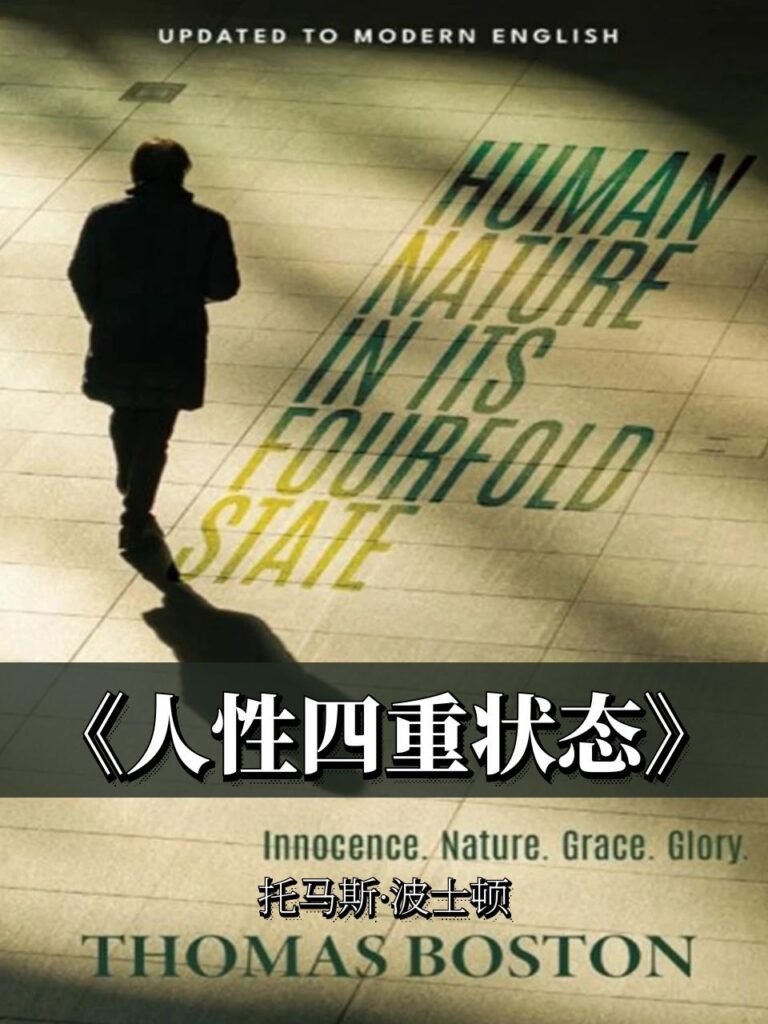
Human Nature in Its Fourfold State by Thomas Boston is a theological and pastoral masterpiece that stands among the most influential works of Scottish Reformed spirituality.
托马斯·波士顿(Thomas Boston)的《人性的四重状态》(Human Nature in Its Fourfold State)是一部神学和教牧杰作,位列苏格兰归正(Reformed)灵性最具影响力的作品之中。
With piercing clarity and deep compassion, Boston traces the spiritual biography of every human soul through four successive conditions: innocence, corruption, renewal, and eternity.
波士顿以敏锐的清晰度和深切的怜悯,追溯了每一个人类灵魂连续经历的四种状态:无罪(innocence)、败坏(corruption)、更新(renewal)和永恒的属灵传记。
But this is no arbitrary framework—Boston draws from a rich theological lineage rooted in the thought of Augustine of Hippo, whose profound reflections on the will shaped the course of Western theology.
但这并非一个随意的框架——波士顿借鉴了根植于希波的奥古斯丁(Augustine of Hippo)思想的丰富神学传承,奥古斯丁关于意志(will)的深刻反思塑造了西方神学的进程。
Augustine, in works such as On the Spirit and the Letter, Enchiridion, and The City of God, famously described four conditions of the human will in relation to sin and grace:
奥古斯丁(Augustine)在其著作《论精神与文字》(On the Spirit and the Letter)、《信仰、盼望与仁爱手册》(Enchiridion)和《上帝之城》(The City of God)中,著名地描述了人类意志在罪恶和恩典方面的四种状态:
Posse peccare (able to sin) – the state of man before the fall
Posse peccare(能够犯罪)——人堕落之前的状态
Non posse non peccare (not able not to sin) – the state of fallen man in bondage
Non posse non peccare(不能不犯罪)——堕落之人被捆绑的状态
Posse non peccare (able not to sin) – the state of the regenerate believer
Posse non peccare(能够不犯罪)——重生(regenerate)信徒的状态
Non posse peccare (not able to sin) – the state of the glorified in heaven
Non posse peccare(不能犯罪)——在天堂中得荣耀者的状态
Boston adopts and expands this Augustinian framework, not for abstract speculation, but for deep spiritual application.
波士顿采纳并扩展了这个奥古斯丁的框架,不是为了抽象的思辨,而是为了深刻的属灵应用。
His fourfold structure—the state of innocence, the state of nature, the state of grace, and the eternal state—mirrors Augustine’s categories while clothing them in the experiential language of the Reformed tradition.
祂的四重结构——无罪状态、自然状态(state of nature)、恩典状态(state of grace)和永恒状态(eternal state)——呼应了奥古斯丁的范畴,同时以归正传统的经验性语言来包装它们。
From Eden’s upright man to the ruined sinner, from the regenerate saint to the glorified or condemned soul, Boston shepherds readers through the entire journey of human nature under the gaze of a holy God.
从伊甸园正直的人到被毁灭的罪人,从重生的圣徒到得荣耀或被定罪的灵魂,波士顿引导读者穿越人类本性在一位圣洁上帝的注视下的整个旅程。
What makes this book enduring is not merely its doctrinal precision, but its pastoral burden.
使这本书持久不衰的不仅仅是它的教义精准性,还有它的教牧负担(pastoral burden)。
Boston does not write as a cold theologian, but as a watchman for souls.
波士顿的写作不是作为一个冷漠的神学家,而是作为一个灵魂的守望者。
He speaks to the mind, the conscience, and the affections—calling the self-assured to repentance, the broken to Christ, and the believer to perseverance.
祂向理智、良心和情感说话——呼唤那些自以为是的人悔改,破碎的人归向基督,以及信徒要坚忍。
Saturated in Scripture and seasoned by long ministry, Human Nature in Its Fourfold State is more than a theological treatise—it is a spiritual mirror, a roadmap of the soul, and a timeless summons to know oneself and be known by the living God.
《人性的四重状态》沉浸在圣言中,并经过长期事工的熏陶,它不仅仅是一篇神学论文——它是一面属灵的镜子,一张灵魂的路线图,以及一个认识自己并被活着的上帝所认识的永恒召唤。
Table of Contents
目录
I. THE STATE OF INNOCENCE
一、无罪状态
Of Man’s Original Righteousness
论人的原始公义(Original Righteousness)
Flowing from Man’s Primitive State
源自人的原始状态
The Doctrine of the State of Innocence Applied
无罪状态的教义应用
II. THE STATE OF NATURE
二、自然状态
The Sinfulness of Man’s Natural State
人自然状态的罪恶性(Sinfulness)
Of the Corruption of the Will
论意志的败坏(Corruption of the Will)
The Misery of Man’s Natural State
人自然状态的悲惨境地(Misery)
Man’s Utter Inability to Recover Himself
人完全无力自救
III. THE STATE OF GRACE
三、恩典状态
Regeneration
重生
Mystical Union
奥秘的联合(Mystical Union)
IV. THE ETERNAL STATE
四、永恒状态
Death
死亡
Difference Between the Righteous and the Wicked in their Death
义人与恶人在他们死亡时的区别
Resurrection
复活
General Judgment
一般审判
The Kingdom of Heaven
天国
Hell
地狱