|
Getting your Trinity Audio player ready... |
中文下载
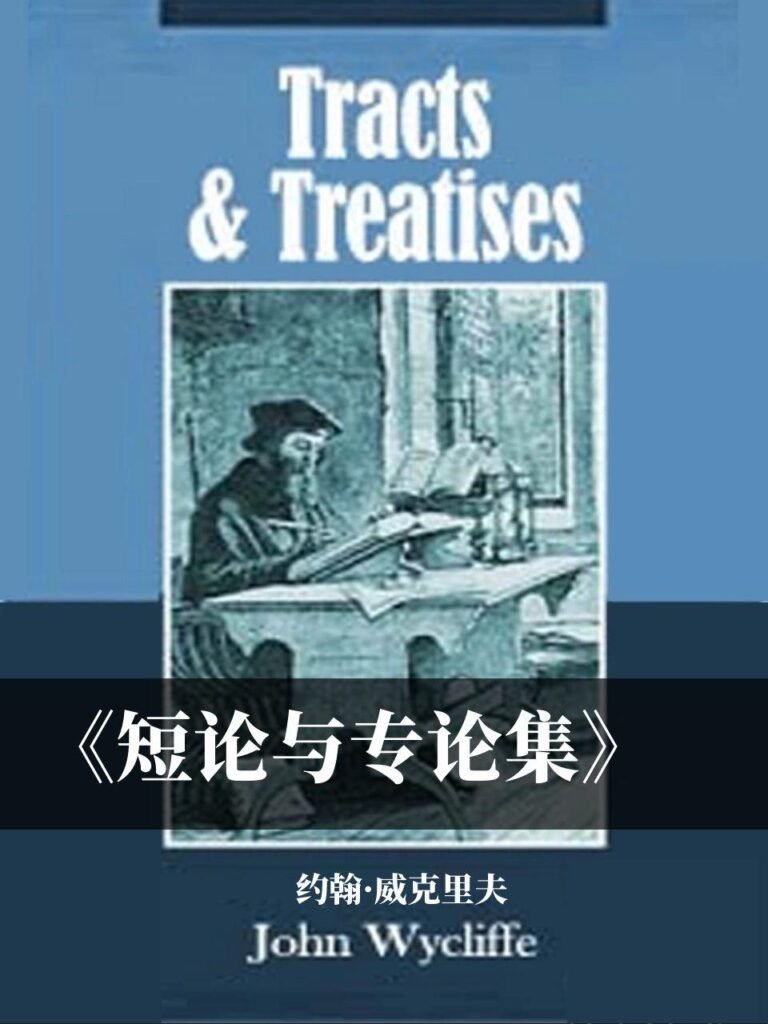
Modernized, formatted, corrected, and annotated (in blue) by William H. Gross www.onthewing.org
现代化、格式化、校正并加了注释(蓝色)——威廉·H·格罗斯 (William H. Gross) www.onthewing.org
Modernization is based on Middle-English meanings, which was the vocabulary of Chaucer.
现代化是基于中古英语的含义,那是乔叟 (Chaucer) 的词汇。
Wycliffe’s translation of the Latin Vulgate is historically significant.
威克里夫 (Wycliffe) 对拉丁文《武加大译本》(Latin Vulgate) 的翻译具有历史意义。
Therefore, although modernized in part, his wording has been retained as much as possible, rather than substituting a current version.
因此,虽然部分进行了现代化,但他的措辞已被尽可能地保留,而不是替换成一个当前的译本。
A biographical notice of Tyndale has this to say about Wycliffe’s previous translation (from the Parker Society’s Tyndale, Doctrinal Treatises, 1848):
一份关于丁道尔 (Tyndale) 的传记通知对威克里夫先前的翻译有如下评论(摘自派克学会 (Parker Society) 的《丁道尔,教义论著》(Tyndale, Doctrinal Treatises), 1848年):
“Wicliffe’s version also had this considerable defect, that whereas there was no one in Oxford in his days who knew anything of Greek, he could only translate from the Latin Vulgate; and consequently he had incorporated all of its erroneous renderings into his text.
“威克里夫的译本也有这个重大的缺陷,那就是在他那个时代牛津大学没有人懂得任何希腊语,他只能从拉丁文《武加大译本》翻译;因此,他将其中所有错误的译法都纳入了他的文本中。”
But besides this, the unsettled state of language, in our illiterate nation, had already made Wicliffe’s English among the things which were passing away.
但是除此之外,在我们这个不识字的民族中,语言的不稳定状态,已经使威克里夫的英语成为正在消逝的事物之一。
‘The ghiftis and the clepyng of God ben without forthynkyng,’ or ‘He made us saaf bi waisshchyng of aghenbigetyng and aghen newing,’ (Wicliffe’s version of Rom. 11.29, and Tit. 3.5), would scarcely have been intelligible to Tyndale’s contemporaries, and would have sounded painfully uncouth to the next generation.”
“‘The ghiftis and the clepyng of God ben without forthynkyng,’或‘He made us saaf bi waisshchyng of aghenbigetyng and aghen newing,’(威克里夫的罗11.29和多3.5译本),对丁道尔的同代人来说,几乎是难以理解的,并且对下一代人来说,听起来会非常不雅。”
In this modernized edition, [brackets] indicate additions to the text to aid understanding.
在这个现代化版本中,[方括号]表示对文本的添加,以帮助理解。
But in many places, sentence structure has been substantially altered to preserve the intended meaning; a “small fix” wasn’t possible.
但是,在许多地方,句子的结构已被实质性地改变,以保留其预期的含义;一个“小修改”是不可能的。
In other places, the passive voice has been changed to active for clarity.
在其他地方,被动语态已被改为主动语态以求清晰。
Original page numbers are retained for citation purposes.
原始页码被保留,以供引用目的。
Unreferenced pronouns and implied words are made explicit.
未指明的代词和隐含的词语被明确地表达出来。
Where God is referenced ambiguously, the pronouns are capitalized.
在模棱两可地指代上帝的地方,代词被大写(指代神时用“祂”)。
Footnotes beginning “Originally,” provide Wycliffe’s wording; though some of his more interesting wording is retained in the text, and explained in the note.
以“原本 (Originally)”开头的脚注提供了威克里夫的措辞;尽管他一些更有趣的措辞被保留在文本中,并在注释中进行了解释。
Robert Vaughan’s footnotes defining obscure words have been brought into the text for easier reading.
罗伯特·沃恩 (Robert Vaughan) 定义晦涩词语的脚注已被引入文本中,以便于阅读。
Other words that were understood in 1845, but less so today, or whose meaning has changed, have been modernized or annotated.
其他在1845年被理解,但今天较少人理解,或其含义已发生变化的词语,已被现代化或添加了注释。
Verse numbering hadn’t been established in Wycliffe’s lifetime.
在威克里夫的有生之年,节的编号尚未确立。
Therefore they have been added to the text where he used only chapter numbers.
因此,在他只使用章号的地方,它们已被添加到文本中。
THE ORIGINAL EDITOR, Robert Vaughan (1795–1868), was an English Congregationalist minister, an academic, and a college head and writer.
原版编辑,罗伯特·沃恩(Robert Vaughan,1795–1868),是一位英国公理会牧师、一位学者,以及一位学院院长和作家。
He came from a Welsh background.
他来自威尔士背景。
He was Professor of History in the London University, and then President of the Independent College, Manchester.
他曾是伦敦大学的历史学教授,随后是曼彻斯特独立学院的院长。
He founded, and for a time edited, the British Quarterly.
他创立了《英国季刊》(British Quarterly),并曾编辑了一段时间。
OF INTEREST: About 1227 A.D., the division of the Bible into chapters was developed by Stephen Langton, an Archbishop of Canterbury,
有趣之处:约在公元1227年,坎特伯雷大主教史蒂芬·朗顿 (Stephen Langton) 发展了将圣经划分为章节的做法,
The Wycliffe English Bible of 1382 was the first Bible to use this division.
1382年的《威克里夫英语圣经》是第一部使用这种划分方式的圣经。
In 1448, the Old Testament was divided into verses by a Jewish rabbi named Nathan.
在1448年,旧约被一位名叫拿但 (Nathan) 的犹太拉比划分成了节。
In 1555, Robert Estienne (Robert Stephanus, or Stephens), a printer from Paris, was the first to divide the New Testament into numbered verses.
在1555年,一位来自巴黎的印刷商罗伯特·艾斯蒂安(Robert Estienne,即罗伯特·斯蒂芬努斯,或称斯蒂芬斯)是第一个将新约划分为编号的节的人。
He used Nathan’s verse divisions for the Old Testament.
他在旧约中使用了拿但的节划分。
Those chapter and verse divisions have been employed in nearly all Bible versions since. — William Gross
从那时起,这些章和节的划分已被用于几乎所有的圣经版本中。——威廉·格罗斯 (William Gross)