|
Getting your Trinity Audio player ready... |
中文下载
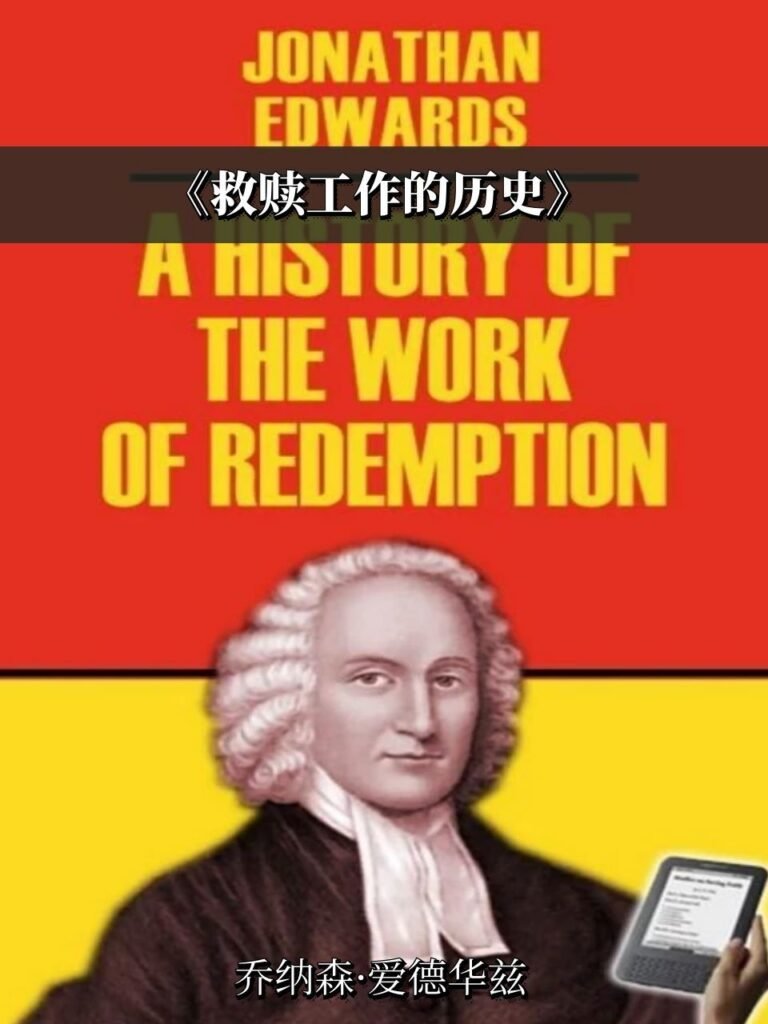
In 1739 Jonathan Edwards preached a series of thirty sermons in his church at Northampton, Massachusetts—sermons based on one scriptural passage, Isaiah 51:8.
1739年,乔纳森·爱德华兹(Jonathan Edwards)在祂位于马萨诸塞州北安普敦(Northampton, Massachusetts)的教会中,根据一处经文,以赛亚书五十一8,宣讲了三十篇系列讲道。
This is a book (based on those sermons) that everyone ought to read and make for a permanent place on their virtual bookshelf..
这是一本(基于那些讲道的)每个人都应该阅读并使其在他们的虚拟书架上占据永久位置的书。
This book has become one of our all-time faviorite titles that traces God’s work of redemption from the beginning to the end of history.
这本书已成为我们一直以来最喜欢的书名之一,它追溯了神从历史的开始到结束的救赎工作。
A robust pronouncement of gospel triumph.
对福音得胜的一个有力宣告。
Whatever novelty the sermon series possesses is literary and theological.
这个系列讲道所具有的任何新颖之处,都在于文学和神学方面。
It partly consists in the rich skein of images Edwards uses to connect the events of redemption history.
它部分在于爱德华兹用来连接救赎历史事件的丰富意象(images)线索。
These include the model of a river and its tributaries, a tree and its branches, the construction of a building, the conduct of war, and “a wheel,” or “a machine composed of wheels” with its reminiscences both of Ezekiel’s vision of the divine throne chariot and of clockwork (“Images of Divine Things,” no. 89; Edwards 1957–, vol. 11, 86).
这些意象包括一条河流及其支流的模型、一棵树及其枝条、一座建筑物的建造、战争的进行、以及“一个轮子”(a wheel),或“由轮子组成的机器”(a machine composed of wheels),它既让人联想到以西结(Ezekiel)对神圣宝座战车(divine throne chariot)的异象,也让人联想到钟表机械(clockwork)(“神圣事物的意象”,第89条;爱德华兹 1957年至今,第11卷,86页)。
It also consists in Edwards’ extension of typology, the practice of interpreting things, persons, or events (the “type”) as symbols or prefigurations of future realities (the “antitype”).
它也体现在爱德华兹对预表学(typology)的扩展,这是一种将事物、人物或事件(“预表”)解释为未来实体(“反预表”)的象征或预示的做法。
Protestant divines had tended to restrict typology to figures, actions, and objects in the Old Testament which in their view shadowed forth Christ as their antitype.
新教神学家(Protestant divines)倾向于将预表学限制在旧约中的人物、行为和物件上,他们认为这些都预示着基督作为它们的“反预表”。
Edwards interprets the New Testament typologically as well, arguing that relevant passages prefigure events in the church’s later history.
爱德华兹也以预表学的方式解释新约,认为相关的经文预示着教会后期历史中的事件。
Most radically, Edwards construes nature typologically.
最根本的是,爱德华兹以预表学的方式解释自然。
(Whether this constitutes a step towards Emerson and Thoreau, as some claim, is a moot point.)
(正如一些人所声称的,这是否构成了迈向爱默生(Emerson)和梭罗(Thoreau)的一步,是一个悬而未决的问题。)
Finally, Edwards’ emphasis on the objective side of God’s act of redemption is comparatively rare in a Puritanism which tended to stress the redemption’s application to individual souls.
最后,爱德华兹对神救赎行动之客观面(objective side)的强调,在倾向于强调救赎对个体灵魂(individual souls)的应用的清教主义(Puritanism)中是相对罕见的。
Table of Contents
目录
Preface.
序言。
Advertisement.
通告(Advertisement)。
General Introduction.
一般导论。
PERIOD I. From the Fall to the Incarnation.
第一时期:从堕落到道成肉身(Incarnation)。
PART I. From the Fall to the Flood.
第一部分:从堕落到洪水。
PART II. From the Flood to the calling of Abraham.
第二部分:从洪水到呼召亚伯拉罕。
PART III. From Abraham to Moses.
第三部分:从亚伯拉罕到摩西。
PART IV. From Moses to David.
第四部分:从摩西到大卫。
PART V. From David to the Babylonish Captivity.
第五部分:从大卫到巴比伦被掳(Babylonish Captivity)。
PART VI. From the Captivity to Christ.
第六部分:从被掳到基督。
PART VII. Improvement of the First PERIOD.
第七部分:第一时期的完善(Improvement)。
PERIOD II. From Christ’s Incarnation to his Resurrection.
第二时期:从基督的道成肉身到祂的复活。
PART I. Of Christ’s Incarnation.
第一部分:论基督的道成肉身。
PART II. The Purchase of Redemption.
第二部分:救赎的购得(Purchase)。
PART III. Improvement of the Second PERIOD.
第三部分:第二时期的完善(Improvement)。
PERIOD III. From Christ’s Resurrection the End of the World.
第三时期:从基督的复活到世界的末了。
SECTION I. Scriptural Representations of this PERIOD.
第一节:圣经对这个时期的表述。
SECTION II. How Christ was capacitated for effecting his Purpose.
第二节:基督如何具备能力(capacitated)来实现祂的目的。
SECTION III. Established Means of Success.
第三节:既定的成功方法(Established Means of Success)。
SECTION IV. How the Success was carried on.
第四节:成功是如何持续进行的。
PART I. To the Destruction of Jerusalem.
第一部分:直到耶路撒冷的毁灭。